The dancing
Céilí, step and sean-nós dance
The three strands of Irish dance you may meet at a dinner show, from the group figures of the céilí to the improvised, low-to-the-ground sean-nós.
Pick a night by the Liffey ↗Quick answer
Irish dance has three main strands. Céilí dances are group dances built on figures and formations, with simple footwork. Step dance is the solo performance style, with a still upper body and fast, precise feet, made famous on stage from 1994. Sean-nós is the older, improvised solo style, danced low to the ground with loose arms. A dinner show usually puts step dancers on stage and ends with a céilí for the audience.
Céilí: dancing as a group
Céilí dances are Ireland's social group dances. They are danced by anything from two to sixteen people, and the interest lies in the figures and formations rather than in fancy footwork: lines that face each other, rounds, long dances and quadrille-like squares. Many were revived during the Gaelic revival of the early twentieth century and later codified, and around thirty of them form the basis for examining céilí dance teachers. At a social céilí the easiest dances are chosen, so a newcomer can follow along while an experienced dancer calls the moves.
Step dance: the stage style
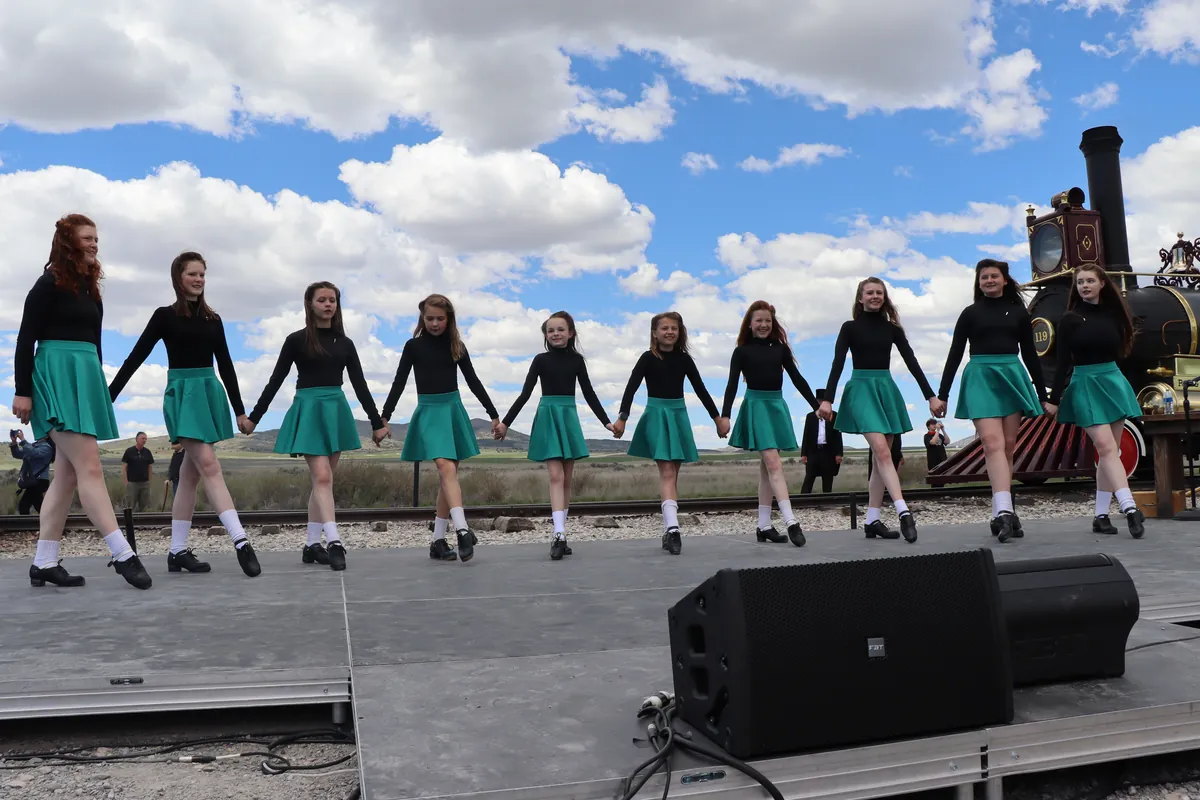
Step dance is the style most visitors picture: the torso held still and straight, the feet moving fast and precisely, often on the balls of the feet. It divides by footwear. Soft-shoe dances include the reel and the slip jig; hard-shoe dances, such as the hornpipe and the treble jig, add the clatter of the shoe as percussion. The style was standardised for competition by the Irish Dancing Commission, set up in 1929, and reached a global audience after an Irish dance interval act at the 1994 Eurovision Song Contest grew into a touring stage show.
Why the arms stay still
One story behind the famous stillness goes back to the travelling dancing masters who taught across Ireland in the eighteenth and early nineteenth centuries. Venues were small, so dances were often shown on tabletops or even barrel tops, which left no room for sweeping arms or travel across a floor. Wikipedia connects those cramped stages with the arms held at the sides in early styles. Modern stage dancers often use their arms more freely, but competition rules still require them to be kept down.
Sean-nós: the old style
Sean-nós means 'old style', and the name covers a way of singing as well as a way of dancing. As a dance it is a solo form: low to the ground, improvised rather than choreographed, with the arms swinging loosely and the feet hammering out the accented beat of the tune, a step known as the batter. There is no set costume and no required posture beyond standing reasonably straight. Dancers often take turns, playing off each other's energy, which makes it closer to a conversation than to a routine.
The brush dance
The dancers at the Bachelors Walk show include the brush dance in their set. It is described as a more specialised form of sean-nós dancing, so expect something in the freer, improvised spirit of the old style rather than a drilled line of step dancers. Exactly how it is staged is up to the performers on the night. As a branch of sean-nós, it belongs to the tradition of personal, improvised steps danced close to the floor, rather than the high kicks of competition step dance.
Set dancing, the céilí's cousin
Set dancing is the other social tradition you may hear about. It is primarily danced for pleasure rather than competition, and it borrows some of the intricate footwork of step dance, which makes it look busier than céilí dancing to an outsider. Irish group dancing as a whole owes a debt to the French quadrille, which influenced it strongly in the late eighteenth century. You are unlikely to be taught a full set at a dinner show, but if you enjoy the céilí, set dancing is the next thing to look for.
Sources